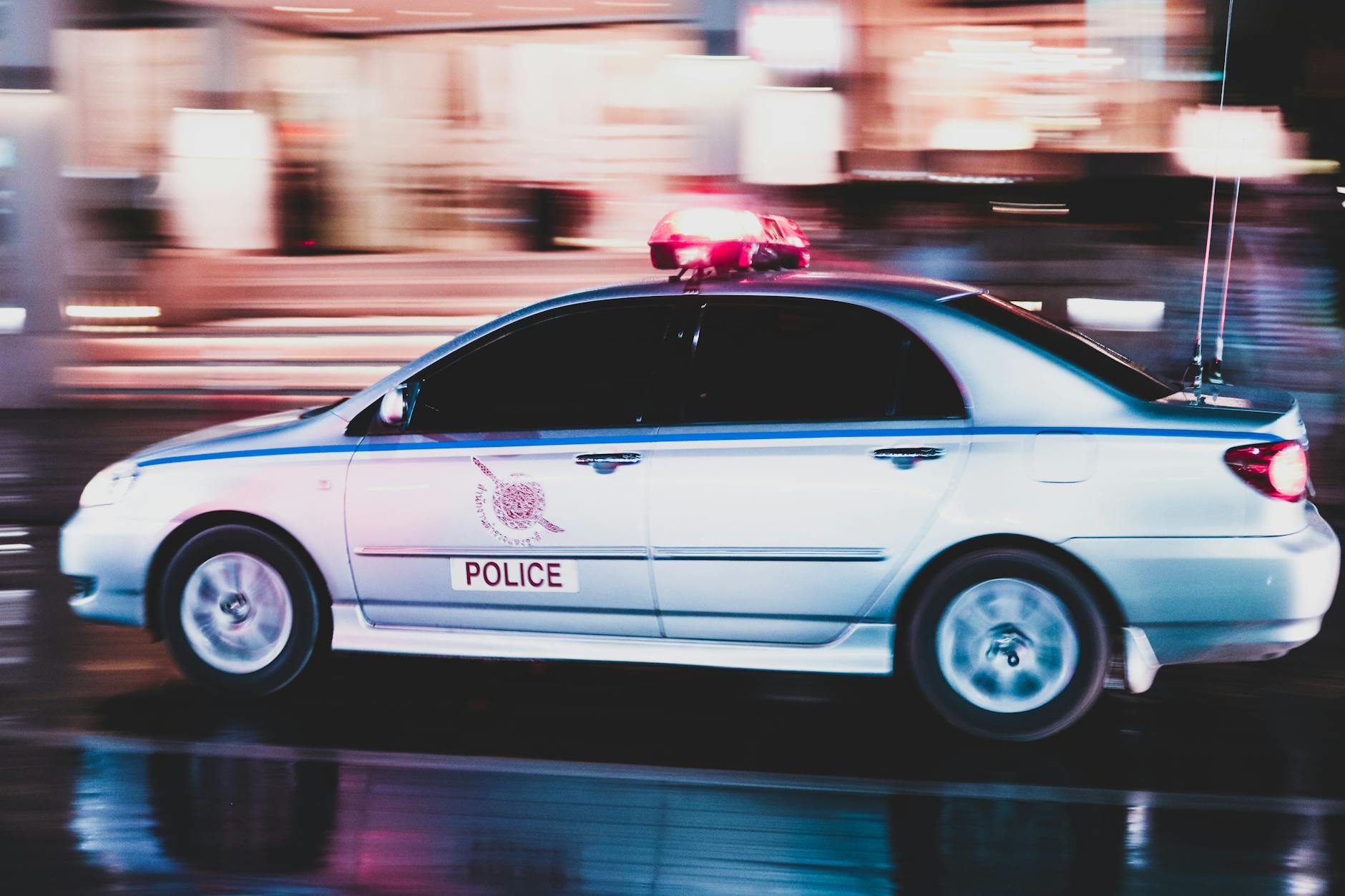
My first real encounter with law enforcement was when I went through a tragic yet somehow benign thing that happened to me more than 20 years ago. By that point, I’d already watched enough TV dramas and movies that should’ve made me evidently skeptical toward the police. I wasn’t. At that point I still saw them as people who could help, and protect me from the bad thing ever happening again. It was also the first time I found myself in a precinct very late into the night. Now, if a kid stays up through the night, this usually means TV shows or video games—which I’d already done without any sleep during a funeral backroom vigil. This is also where my sense for the novel and the sublime got developed and appreciated.
I’ve seen enough indie cinema, too, to understand how nasty the police community can get, especially what happens behind closed doors. The Cinemalaya entry Pamilya Ordinaryo comes to mind when we talk about how marginalized people get more marginalized instead of being defended in the hands of the police.
In another instance, I was applying for a Postal ID—the first nice ones—and I needed to file my biological data. The food store, I reckon, selling rice, could’ve helped me measure my height and weight—dimensions important for commerce—but it wasn’t viable. As a last resort, I went to a nearby police precinct expecting to be forwarded to some more viable ideas, them knowing their way around town. I was met with positive, operational, business-as-usual vibes, and got a very benign invitation to their mugshot area—a place purposefully built for biometric capture. I told them what it was for, they helped me take my numbers, and sent me off. I was in my early 20s.
It’s not law enforcement but close; some of my best and most wholesome encounters with strangers have been with people with guns—in this context, security guards. Granted, most of them were just really bored; many of them just wanted to break the monotony and connect with people. The job can get boring and lonely. But out of that boredom came something instilled in me: that guns are just guns. Not that they let me hold them—breach of policy—but I did get a used bullet that already had holes in it, just in case I’d find the chance to turn it into a pendant. As a young boy, this was arguably one of the coolest things someone like me could get. I’ve had a selfie with a few in front of a restaurant at Quezon City Circle.
Stupid, desperate me found himself at a precinct one working afternoon, complaining about a ticket scam. Look, I’ve never been a die-hard Paramore fan, so I didn’t really step into the no-man’s-land (like any savvy person would) of falling in line at the box office for them. But a brother’s gotta do what a brother’s gotta do when his sister sends him a reseller’s link that claims to have the stuff she needs to see her favorite band.
One of what I could only tell was a higher-ranking official—after what I remember was quite a stressful exchange with a colleague—turned his head up from his notes on the reception table and looked at me with his smile reset: “Hello! What can I do for you?”—a la NPC, almost, as the kids would call it.
I brought out my exhibits and proceeded to tell my story. He listened intently as we walked over to one of the benches in front of the precinct. He sighed and shook his head, communicating shared empathy and disappointment with the kind of flavor and rigor you might infer was taught through briefings, seminars, the police academy, or some continuing law enforcement education.
“It is really hard to put that kind of trust into someone.”
“I’ll tell you what…”
The officer proceeded to give me an address and a contact number for what I understood to be the police headquarters known as Camp Crame. Apparently, they are more capable of handling internet cases there.
I went to the office and waited for a few hours. In front were people lined up in a squatting position, with what I could tell were zip ties on their wrists behind their backs—a couple or more officers with their guns keeping watch over them under the sharpening sun, post-lunch break. A contrast from that distinct, almost chilling, government-office temperature inside, where I suppose all the good guys get to stay and wait.
My turn came, and I turned in the same exhibits to the receptionist. A little less than an hour later, I was called in to an officer’s desk. Of my affidavit, he asked me, “Did you take up law? Journalism?” Yes, it was flattering—but I am a graphic designer, as I always have been (and probably always will be, in some form or shape).
We proceeded to discuss the issue at hand. The officer took out his rubber stamps, typed a few things on his computer, and jotted a few things on some paper on his desk. I was sent on my way home and was given a contact number and a probable time I could circle back and get some useful information.
Time went by, and I understood that a four-thousand-peso ticket fraud case might not have been more pressing than an online trafficking case—which I would suspect involved the people who were lined up earlier in front of the office. Prejudicial and stereotypical, for sure—but they honestly looked like the kind of people who just got caught doing something bad.
The War on Drugs initiated by former President Duterte is a polarizing topic. Distilled, it goes like this: drug users use drugs, the police find them, and if or when they resist, they die. And I heard death is what happened in certain cases—many, many, many certain cases, including kids. As the world saw in many morning news reports, people lay bloody on the floor, lifeless, cardboard covering their faces reading “I am a pusher,” or something else related to why they allegedly deserved their fate.
Whether it made the streets safer, as they said it did in Davao, is—and will always be—up for debate. What’s sure is this is not a good look for the police, a department already having as long a bad reputation as even before, in their days as the Constabulary. “Mamang Pulis” is what parents and guardians use to scare their kids when they won’t stop running around or crying.
They try to turn this around and have been enlisting help from people like me—people in the creatives industry—to give them a facelift. Well—maybe. I’m not really sure if the slogan “To Serve and Protect” was born out of a discovery session.
And for the most part, I think they do. They have been trying, maybe. The same way they tried to help me when my iPad got stolen.
I could’ve just run to them the moment I noticed it was missing at a McDonald’s. They could’ve just looked at my Find My and engaged in a hot pursuit—the same legal circumstances under which, when you catch a drug dealer red-handed, for example, you can apprehend and detain those jerks within hours.
But I didn’t. I figured I’d catch the bad guys on my own because the police are busy. I’d get more questions. It’s the movies, the TV drama, the War on Drugs, the bad press—the Mamang Pulis; they won’t be able to help me.
Around 12 midnight, I found myself making a phone call to the precinct nearest to where Find My was pinging the iPad’s location. A little less than an hour later, I found myself in that distinct, sub-zero precinct temperature. I told my story, spent more than a couple of hours with no less than five officers—and then some of their assistants—scouring the narrow alleyways through what I consider one of the most desolate swamp districts of a shanty town I’ve ever personally set foot in.
We couldn’t get closer to the coordinates—it was behind private property. But as we moved closer prior, I thought we were going to find retribution—justice, victory. A picture of the Lord of Hosts in the Last Days, coming out of the clouds with His eyes blazing with fire, up on a white horse—with His armies upon armies striking evil down, even the Devil himself, all with a flick of a finger—popped into my head in full panoramic projection.
There is a God. There is a God.
I was referred back to the precinct within the district where the iPad was stolen (as per proper procedure), and I found myself there the immediate morning after, skipping work. I was at the bargaining stage: bargaining for the CCTV footage, bargaining for comprehensive support from mall security, bargaining for the police to help me bring down their hosts again in V-formation like what had just happened hours earlier.
I did this for a good week, with my mother helping me go back and forth to related offices—praying, scaring, psyching anyone whom we thought could help us.
I found myself one last time in the police station. There were no people lined up, squatting, with their hands tied behind their backs for the bad stuff they did. But by then, what I did see was a system with its hands tied way behind its back—and around its bottom.
Ultimately, they couldn’t do anything.
There was no scene a la Pamilya Ordinaryo asking me to strip naked, and it wasn’t like in a mid-80s action film where I get a condescending tap on the back, smoke blown against my face, the Chief in fatigue telling me, “That’s all gone, son.”
The Chief, in fact, was in blue—the heat-friendly polo blue. I’d been there enough times to take notice.
“Officer, go with the mister over here. Take him on your moped to the current pin location in Greenhills and talk to the precinct there.”
“You—Officer, please assist the lady here with a concern.”
“Ma’am, please wait over here. I’ll call you in later.”
“Nobody with no business here gets to hang out here!”
“Officer, don’t leave any information out—we have to see to it that the complainant is satisfied with what we’re doing here.”
And all that was happening in this small container unit they converted into an outpost. This is the precinct—a couple or three blocks away from the McDonald’s in the mall where my iPad got stolen.
For whatever intent or purpose any of us may have, I reckon this is the actual police.
It tracks. From my first blotter 20 years ago up to my most recent brush with the blotter desk, it is a recourse. It is a place where you do get a chance to save something—something that can (and does) give you a fighting chance. And you feel that.
They’re in uniform. They have guns. They can and will try to catch your thief—or your trafficker, swindler, et cetera. In fact, they have to. It’s their job. And like any job, they succeed—and they also fail at it.
Of course, when you’re the one who got hurt—just like how I have been a couple of times—this won’t be enough.
“Our taxes pay them to serve and protect, for crying out loud. Protect us! Don’t be stupid! Move faster!”
“Is this all you can do, officer?!”
“That is all the officer can do, Tim,” our family lawyer told me halfway through negotiating one last-ditch effort to retrieve the CCTV footage. “There’s a huge scandal happening with the police right now, as you might have heard in the news. Now, we can write the papers all we want, but you have to think hard if this is worth the hassle—or just get a new iPad.”
Thank God I have someone whom I can actually call a lawyer. And without being insensitive, I’m not exactly helpless here—evidently, given the fact.
Whether I get a new iPad or not is something I’m still debating. It’s been more than a year since I lost it.
What I’m not debating so much is whether or not I’d find myself in a precinct again if or when trouble comes.
I’ll find myself there.
I’ll go to the blotter table with my exhibits and tell my story. I reckon I have to be there if I ever want to get as close to retribution as I can—even without the guarantee of crossing the final mile.
And I know this isn’t a very good consolation—and privilege would show—but feeling that I had a chance, that I may someday win, having that Chief-promised satisfaction—and that I’ve been graced with some of the coolest air-conditioning breeze I can ever feel—is always a better square one than nothing happening at all.
Of course, the real conversation has always been getting everyone to square two.
And everyone has an opinion as to what that might be.