The Paralysis of Discourse
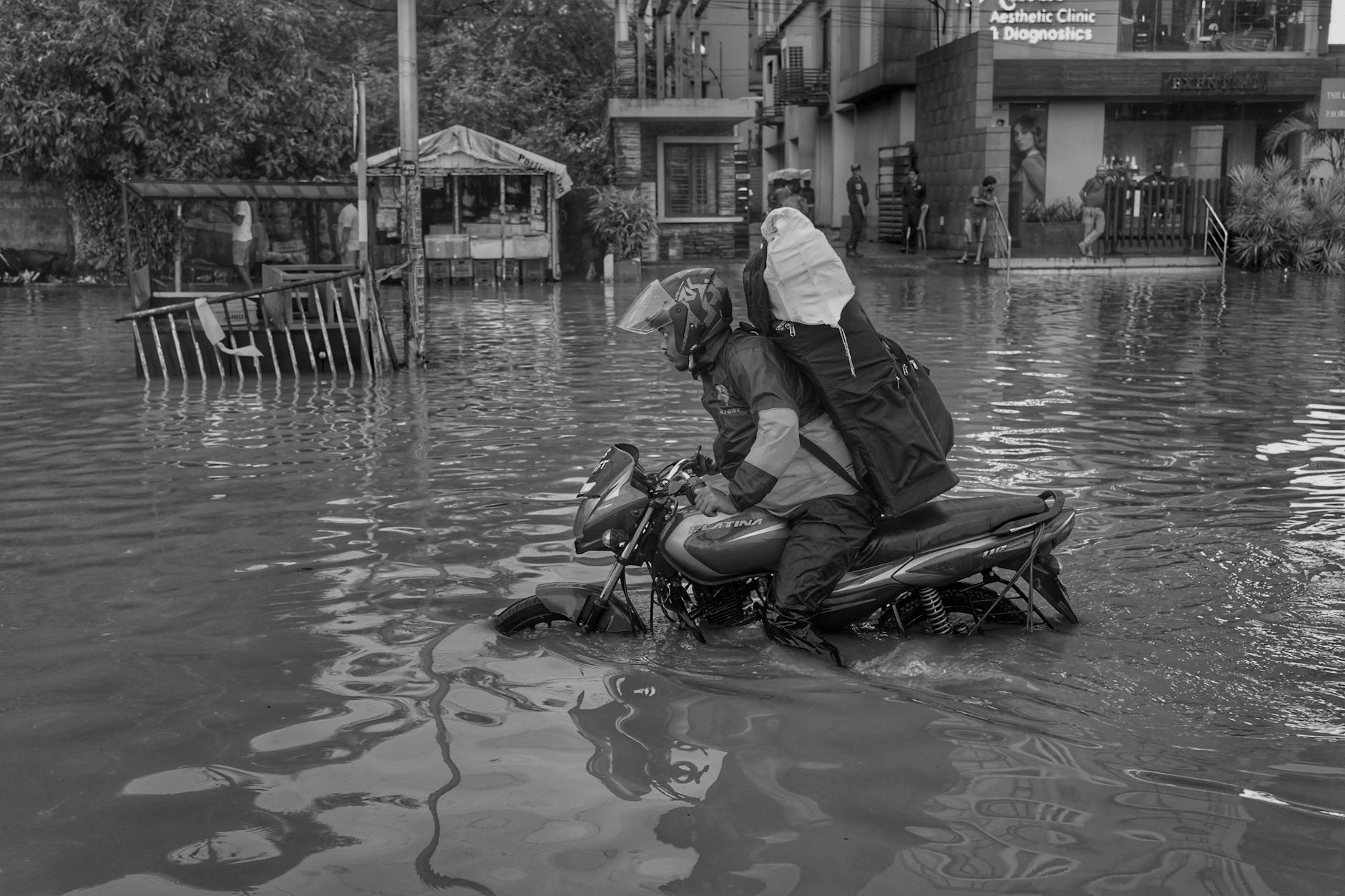
Every year the floods return. Every year the same press conferences, the same charts, the same promises. The water subsides, the anger fades, and we return to our routines until the next storm.
It’s not fatigue. People are energetic about making suggestions and trying to fix things. The problem is we’re helpless.
We were taught in elementary that, like Jose Rizal, words—writing—can effect change. We’ve seen the best of its results, but we’re also seeing the most futile: social media. People are willing to speak up, think clearly, debate, and express themselves to their hearts’ content online—but they don’t seem willing to do the legwork. And even if we wanted to, we don’t know where to start, and we don’t have the resources. Ranting and writing has the lowest barrier to entry.
I think that’s the problem. It’s easy to write and build utopian narratives in our heads. What’s hard is actually making them happen. Because once we try, all the boldness, intelligence, and strong will vanishes when put face-to-face with the inertia of not just power, but the culture that enables that power.
I’ve tried this. I’ve tried to make good on what I say. Being given opportunities to have executive significance on how things are done, I learned that scratching the surface comes at the cost of earning scratches yourself.
First, there’s the tension you create with people who are entrenched, those who love the current order. The political bandwidth needed to effect even the posture of change—not even the practice of it—is massive and resource-intensive. Then there’s the feasibility of change and the other material realities.
Ranting or writing is very easy. Putting it into practice is a different ball game entirely.
The Weight of Authority
If action is costly and words are cheap, then perhaps the problem runs deeper than laziness. Perhaps it touches on who we expect to carry the weight of moral responsibility—and whether holding power changes that calculus.
To me, and to many Christians I know, accountability doubles immensely once you hold a title. Righteousness means God may have put you in a place of power where he backs you into shaping policy or culture. But even then it’s not frictionless.
David had the old guard in the form of Saul as his unstable enemy. Moses had opposition too. I don’t think this kind of authority guarantees political utopia, as the New Testament progressively reveals through Paul, the other disciples, and Jesus himself.
In terms of political success, they dealt massive blows. They are failures by that standard.
They did, however, minister to the best of their graciously bestowed abilities—and not without words. In the end it was their words that were immortalized, cemented as the cornerstone for change. Of course, much of that change is individualized and spiritual, not political.
The System and Its Roots
Even among the faithful, political success proves elusive. Words endure where power fails. Which raises the question: if even divinely appointed authority can’t fix broken systems, what hope do our transit reforms and flood control plans have?
At this point, it’s hard not to get cynical. Dysfunction cannot be solved in a sinful culture—in a sinful world.
But I believe you can rein it in to some extent, because most moral agents—humans—have a basic understanding of right and wrong, beauty and ugliness. You can see this with Filipinos like myself who travel to neighbors like Japan and Singapore. All of them return home aspiring to the same for the Philippines.
Like them, I don’t just “think” a comprehensive BRT and railway system can be done here—I know it can. The issue is we think, from our smartphones and YouTube analyses, that we know how it can be done—but we don’t. We only know something is wrong. We don’t realize just how entrenched dysfunction is, and we refuse to admit that it is us—as Filipinos, as human beings—who are responsible for the cultural building blocks on which the system is built.
We may abhor the system, but the problem isn’t systematic at its core—it’s cultural. You can’t expect political and bureaucratic consistency if those who have the ability, education, and mental faculties to throw bottles in the right bin deliberately choose the curb instead—accompanied by the most amusing mental gymnastics one could ever witness, anything but admitting internal dysfunction.
It’s a feedback loop. Inefficient and dysfunctional cultures breed inefficient and dysfunctional systems, which in turn breed more inefficient and dysfunctional behaviors and cultures.
In the debate between which came first, the chicken or the egg, the Bible postulates that culture comes first, from which systems are born. And individuals come first, from which cultures are born. The culture is the chicken who lays the egg which hatches into another chicken.
There’s this idea that if we only had the right tools and environment, everybody would be better people and make a better society. But the account of The Fall within the Garden of Eden—the most perfect place in the world—levels this assumption.
Pride and Apathy
If culture shapes systems and individuals shape culture, then the problem traces back to something in us—not just in our institutions. But what exactly? Is it that we lack resolve? Or is it something else keeping us locked in these patterns?
It’s both. Pride that we’re confident fixing things is easy. Apathy that we don’t care enough to put both feet in the door. And they feed on each other.
We have all the will to put our left foot in the door, and we take pride in it. But what society needs is both feet on the floor. No human being has ever done that. Adam and Eve weren’t willing to.
What is the right foot? It’s the denial of self for the love of Christ.
Christ is the best model for societal change. What he did was image the love of God by giving himself fully in the name of God’s holiness. Jesus is a statement that God is not like human beings—it is in his conscious, volitional nature to have both feet in the door.
God has the capability to substantiate and satisfy both the letter and the spirit of transcendent policies in the most cohesive way possible—and he makes it happen through Jesus.
Beyond Policy
So the answer isn’t more willpower or better organization—it’s something closer to self-denial and complete commitment. But that sounds impossibly idealistic for fixing floods and traffic. Surely there’s a practical middle ground? Can’t we just write better laws?
Policy alone can’t save us. Policy is an expression of our aspirations, and generally speaking, everybody has good aspirations. Dare I say Marx had good aspirations.
But this is exactly where he stopped having good ideas. For all his valid sentiments, he saw the world through the same lens as the “bourgeoisie” he condemned—the premise that material accumulation is power and that history revolves around it.
The way humans see self-preservation is the problem. It’s not that self-preservation is bad in itself, but the mode is. Biblical self-preservation doesn’t hinge on materialism but on imaging God in our lives by applying his character in our entirety—in our affection, conduct, affairs, and policy.
This imaging doesn’t hinge on materialistic predicates. It hinges on the fear of the Lord. That fear—reverence—is the conduit that draws from an inexhaustible and constant resource: the holiness of God.
Marx may be right that resource is power. But the Bible defines resource and power differently. The holiness of God and his goodwill expressed through Christ and the Gospel is the resource. The power is a wholistic and persistent deference to that goodwill—something Adam and Eve categorically rejected by choosing to defer to their own idea of an inner-sourced goodwill, which is nothing else but selfishness and self-preservation in practice.
The Middle Ground
Even good intentions fail when rooted in the wrong understanding of power and resources. Marx wanted justice but built his vision on materialism. We want functioning systems but measure success in physical outcomes. If the foundation is wrong, what does right action even look like?
The middle ground is there. But I guess that’s the limit of that metaphorical language: “ground.” We’re only looking at the surface level of how goodness and order look. There’s no disagreement on where we should be as a society. Most of us want more or less the same thing.
But there is much disagreement on for what—or whose—end we should be there. That spells a cosmic difference in how we get there, and we see that difference now in all the dysfunction we encounter.
I think of a tug-of-war. The flag is already at the middle. We know what the middle is. But when two teams have different interests, different goals, that small tilt to either side starts to matter way more than the beauty of the flag being dead-center. In fact, it is exactly the flag being dead-center that becomes the least of the interests of those on either end of the rope.
Providence in Dysfunction
We agree on what good looks like but war over why we’re pursuing it. The destination matters less than the allegiance. Which means all our dysfunction might not be accidental—it might be revealing something about our divided loyalties, about which kingdom we’re actually building.
I’d venture to say the dysfunction is the providence. This is like the Tower of Babel, where the Lord confuses the language of the people so they don’t succeed in building the tower.
The providence is in The Fall. Instead of sustaining a common definition of power—the wholistic and persistent deference to God’s goodwill—and resource—God’s eternal guarantee of goodwill in the Gospel through Christ—God walks us through this huge detour for an elaborate demonstration of the antithesis. To eventually accentuate and magnify the thesis of Creation, which is in part characterized by his preeminence over the concept of power and resource.
Rebuilding in Grace
If dysfunction is itself divine pedagogy—a long lesson in what happens when we try to build without the right foundation—then perhaps our repeated failures aren’t the tragedy. Perhaps they’re pointing us toward something we haven’t fully grasped yet.
Somehow that’s the whole point. The idea is that we will eventually see everything go full circle, the end of the walkthrough, rebuilt in grace-wrought power and resource through Christ.
For now, I think the dysfunction, the “there but not yet there,” is part of the plan, as Genesis and the rest of the Bible propose. The idea is certainly not to try and change the plan—we can’t, we’ve been trying—but neither is it to abandon the narrative.
What’s the idea? To eventually accentuate and magnify the thesis of Creation. It’s like God is saying to us: “Okay, keep trying… and you’ll find some success. Of course—I made you! But I’ll show you how it’s actually done at the end. And then it will be everything you’ve ever wanted, and you’ll fully understand that I made you for me, because I will be what makes everything beautiful.”
What’s the thesis of Creation? To build a cosmic enterprise that runs on and for the unsearchable beauties and excellencies of God—in his power, in his resource.