Tokyo, and the Taste of the Sublime
I miss Japan. I miss Tokyo.
Things have a way of sinking into me long after they happen, and Japan was one of those things. I’d wanted to go for years before I finally did—then, almost casually, I found myself there a few months ago.
I remembered craving the energy, the neon lights. Sublime—that’s the word I was looking for (and yeah, I had to ask ChatGPT to help me find it). I like the sublime in reasonable portions, and I think cities give me that.
Watching reruns of Bourdain in Tokyo hits me the same way. Whether on my iPhone years later or on our old living room TV, long after Tony was gone, I remember how it made me feel. Sublime works there too.
The Solitude of a Crowd
I like that in-between feeling—the solitude of being left alone in a crowd. Bars, towers, city lights, that distinct aroma of the pavement mixed with the half-symphony of cars and horns half an hour before 11. You’re so tired, and yet the night still feels young.
It’s not just the night, though. The city in the daytime is every bit as sublime, just in a different way.
I don’t remember everything Bourdain said about Tokyo, but I remember how watching that episode made me feel—and how much of it matched my own trip. It went by faster than planned. Maybe because we wanted to make the most of it—working-class Filipinos don’t exactly fly to Tokyo every year. Or maybe because I spent too long hunting for a cheap, made-in-Japan Sony device that no Don Quijote store would ever have. Still, the essence was there. I felt Tokyo the way you feel your own city: not as a tourist, but as someone who knows how to live by the roadside.
Noise as Home
See, I never felt the urge to “escape the hustle.” I’m from Quezon City. I’ve lived with the noise all my life. I’ve flirted with the idea of rural living—peaceful, green, Instagrammable—but if I’m honest, it can get boring. Detoxifying, sure. But sterile. Cities are exhausting, yes, but they’re alive. They give you both chaos and calm if you know where to look.
Maybe that’s why people go back to their condos and apartments after a few days in the province. And that’s what I like about cities—urbanity in general. It’s noisy, yes, but it’s not like silence doesn’t exist here. There are parks, special zones, resorts, staycations. Maybe it’s not the city we’re trying to escape—it’s our relationships in it. Our conflicts. The same tensions would find us anywhere.
Playground of Concrete
As a kid, I can’t think of a better place to grow up than in a real-life jungle gym—what some singer eventually called the “concrete jungle,” where dreams are made of.
You’ve probably heard about kids playing in fields or building sandcastles. City kids have their own version. It’s walking ten blocks to the mall. It’s sliding down stair rails. It’s staying alive crossing the street.
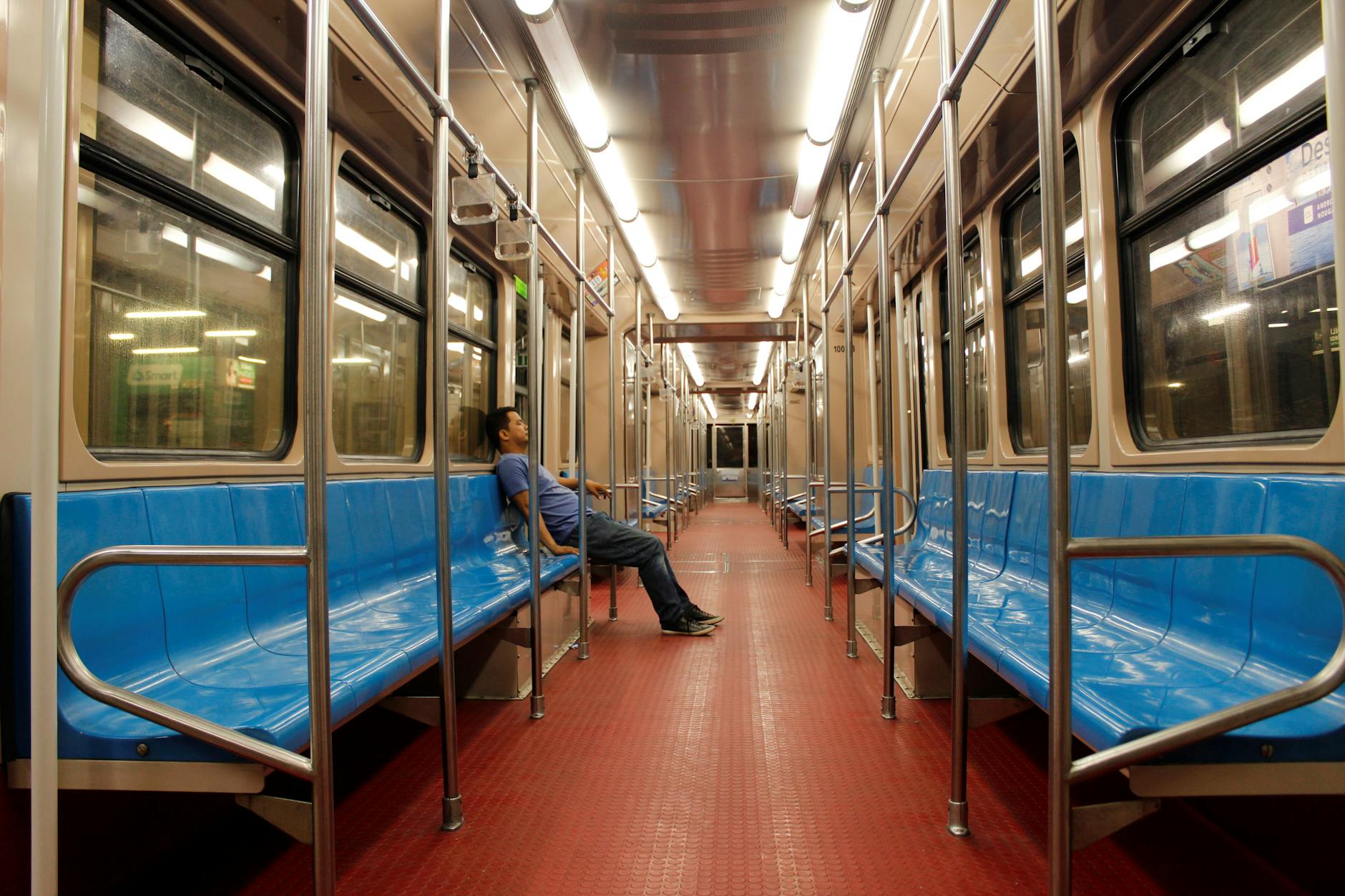
It’s meeting up in a convenience store for ice cream. Trying not to fall over in the train when you refuse to hold onto the handrails. Riding the grocery cart down endless aisles and ending up in the funky-smelling meat section, staring at live shrimp in their last moments.
It’s knowing the difference between police, firetruck, and ambulance sirens—and annoying your teachers with them in unison during a 3 p.m. physics class when the heat’s unbearable and you’ve given up on surviving it quietly.
Honestly, it’s not that bad. The charm of the city is in exactly what makes it the city: the artificial, the choreographed, the chaos, the steel, the noise, the chrome, the pavement, the lights, and the wheels. You either find it charming or you don’t.
Freedom Within Structure
I tried being the naturalist once, waxing poetic about cows and fields and grass “moshing” in the wind. But even then, I used city words to describe rural things. Because that’s who I am: a city kid, wired with city metaphors.
If I were born in the middle of nowhere, I think I’d still find my way into the city—and love it. Just as many city-born kids find themselves drawn to waves and sandcastles, I’d be drawn to pavement and traffic lights.
The city is a performance between environment, infrastructure, and culture. Rural areas have that too, but in cities, it’s louder, more obvious. The city stays a city because its people keep it that way. The expectations, the values—even with all its mixed cultures—converge into an oscillation of efficiency, enterprise, and electricity.
Names of places get chopped short by barkers the way auctioneers fire through numbers. Code-switching becomes a kind of creole—crazy, improper, maybe even sacrilegious—but it works.
Why take ten seconds when you can take five to slide a whiskey across the bar? Why be slow and reserved when life’s good? The concrete might be rigid, but the life inside it isn’t. It’s free, flexible, fun. I’d rather have freedom within structure than structure imposed on freedom. Like the difference between a free-range animal and one on a leash.
The city gives you boundaries to play in, structures to forge your path through. And it’s the people who keep it alive.
The Rhythm We Share
People always say the environment shapes us, and I agree—but I also think we shape it back. The city grows with its people. Its rhythm is ours.
City kids, I think, are one with their city. You can take the kid out of the city, but not the city out of the kid. There’s no “city kid in me” talk because the city is me. That’s the depth of the association, the identity, the rhythm.
Bourdain once walked through Manila and captured it exactly the way I see it. (I’m technically from Quezon City, but hey, New York, New York is a thing.) He showed the city as I know it—messy, alive, charming in its imperfection.
What makes any city a city are the people who find joy in calling it both their home and their escape. The ones who embrace its flaws and still find peace there. Bourdain knew how to do that—and let the world know how at the same time.
The Calling of Concrete
The countryside has its stars; we have our skylines. They have meadows under constellations; we have coffee shops and bus stops lit by fluorescent light. The sublime hides in both, but it appears when you look long enough, when you take something for what it is and see if it resonates.
For me, the city does. It always has.
The Doctrine of Election, irresistible grace, effectual calling—these don’t directly connect to being a city kid, but if you’ve been a Christian long enough, you’ll find a mental pathway. Maybe even being a city kid is a kind of calling.
People talk about missions in far-flung places, and that’s good. But I don’t see why staying, thriving, and serving in the city can’t be a calling too.
For as long as I’ve lived, my heart’s been here.
I think I was called to be here.
And I’m okay with that.