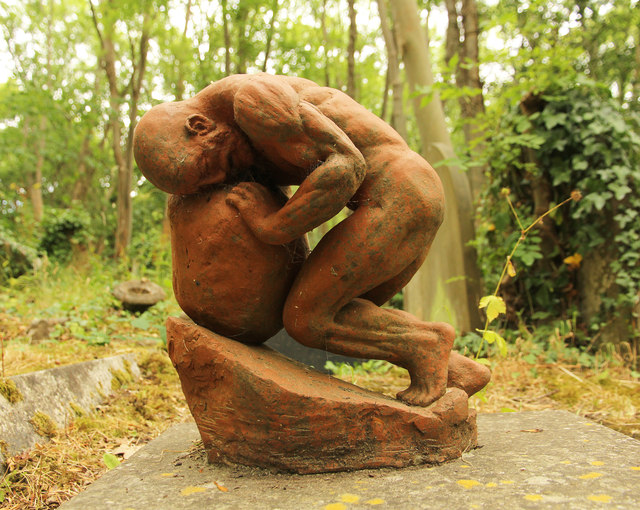
There’s a sense of nobility usually attributed to being okay with pain, suffering, struggles, and generally the way things are: difficult, painful, and imperfect. I understand that. I catch myself preaching along those lines, suggesting that many components of the Fruit of the Spirit exist as a resistance to forms of suffering. One component is even called “longsuffering” in certain Bible versions. My premise has been: you wouldn’t need to be patient if there were nothing to be patient about; there is no exercise of self-control if nothing threatens to lose control in the first place.
I see how this leads people to treat pain, suffering, struggles, and malevolence—sin—as features God determined, not bugs. In a way, if you’re a “supralapsarian” (as many are as Reformed theology crystallizes among Filipino evangelicals), this tracks. It is the idea that confirms sin as a permitted and natural-but-not-causal feature, rather than something God had to “tweak” his creative intentions for after the Fall (the “lapse”).
In this view, sin and pain are features, not bugs—not necessarily created by God, but surely existing because God made it so they could be. There are expressions within analogous circles elevating sin as a fundamental variable for glory. One example posits that sin exists so the Gospel may have a platform to operate on, which aligns with how I think about the Fruit of the Spirit. No sin; no need for the Gospel—no need for God to establish his glory because nothing contradicts it, so to speak.
There’s another perspective: ugliness, pain, suffering, and sin exist as a reference point to serve the appreciation of their antonyms. As the idea goes, you will not understand the weight of holiness until you suffer the fruit of unholiness; you won’t know how good goodness is until you experience the utter evilness of evil. There is no desperate craving for godliness without being utterly repelled by godlessness.
Up to this point, it seems consistent with how Scripture deals with sin and suffering. But then I realize it doesn’t paint the whole picture. At the end of each Testament, Old and New, there is Eschatology—the study of the end times and how we exit the current state of things. In both sides of this metanarrative, the final reality mirrors the beginning, with one exception: there’s no implication of a refreshed supralapsarianism. In fact, there won’t be any lapsarianism at all—no sickness, no pain, no suffering, and no sin. In the “New Heavens and the New Earth,” everything is categorically made perfect.
Wait—wasn’t the metastasis of sin part of the design? The world has spent millennia building life in and around something it thought would be there forever. Then—poof—every enterprise meant to alleviate suffering, every holistic strategy to buck the effects of pain and temptation: gone. One of my go-to preachers expressed that on that day, there won’t be any need for doctors or lawyers; there won’t be sicknesses to cure, death to prevent, or anyone to defend. How many tears have been shed, blood spilled, and relationships strained for the sake of passing board examinations to practice such services? How massive have the social and cultural machinations become just to end up saying, “there won’t be any need for that where we’re going.”
I’ve always had the impression—and I believe it is a Spirit-wrought one supported by the Bible—that this pervasive feeling of having to be “okay” with suffering, which I identify as spiritual masochism (classically, asceticism), is flawed. Much of our current moral culture treats sin and suffering as badges of honor: “I have endured,” “I have conquered,” “I am alive.” If you’ve sat with the Gospel long enough, you’ll sense an internal inconsistency here. Simply put, it shouldn’t be about your strength, but Christ’s. As R.C. Sproul paraphrased: “It’s not that you hold on firmly to Christ, but that Christ holds firmly to you.”
We can’t seem to last a week without making things about ourselves, and we have not spared pain and suffering from such initiatives. This is why many people, Christians included, recoil at the thought of losing the very things they believe make life “life.” If there’s nothing to beat, nothing to win, and nothing to rise above, where can fulfillment be drawn? The future seems flat to those of us used to rough terrain, who call the potholes “beauty” even while aspiring to flatten them into something more bearable.
Is it then about “The Climb”? Miley Cyrus tells us it “ain’t about what’s waiting on the other side.” If you map that onto Christianity, it’s like saying “it’s not about Heaven”—which is incredibly violative. It is about what—and Who—is waiting on the other side. It is about a day we are called to yearn for: the absolute absence of whatever made “the climb” necessary. Jesus encourages us to look forward to the day when we will no longer be like Sisyphus—when the pushing stops because something is better than the pushing. Whatever “honor” there is in the struggle is not the end. The honor is at the end of it.
To wrap this up, I recall Jesus weeping with those who wept. Many use this to say, “See! Weeping is part of life!” But that story ended with joy. It didn’t end with death; it ended with rejoicing and life. Through this example, we see that Jesus is not happy with pain and sin. His moments leading to the Cross tell us that. He didn’t say to the Father, “Alright! Bring it! Score one for Team Trinity!” Instead, he said: “I really don’t want this. Can we try something else? Please take this cup from me.”
I think that’s the approach we ought to have toward sin and suffering. We should acknowledge its place in God’s plan—the establishment of His glory through our sanctification as He prunes us to produce the Fruit of the Spirit. That’s true. Yet, as feature-like as it may be, it is a feature God is heaven-bent on making obsolete because it’s bad and shouldn’t be here. He is calling the shots, removing it stake-by-stake, until the whole world makes way for Him.
It is a course, but not one for humans to call home. It is a course for God to redeem and prevail upon. And it happens every day, whether we get behind that program or not.